
I remember standing outside PJ hall waiting to enter the exam hall with the rest of my friends, my brain going mad about how I might be flunking the exam right about now when I stepped into the hall. I recalled having blurted out one sentence that made me wonder if it was fate trying to work its way through me or me just being a mad 22 year old who didn’t know what to do with herself when signing up for the module ‘Born to Run’.
“I would rather run a marathon than do an exam.”
Voila, here I am now, writing this blog in preparation for training for a marathon, said marathon being the Liverpool Rock & Roll marathon happening on the 25th of May 2020. After coming up (and still in the process of refining) with a training plan, I decided to put my words into actions and actually start training for a marathon, even though it is freaking cold and I would rather curl up in bed and continue sleeping in on the weekend.
Which leads to the question as to why am I even running a marathon in the first place? Many people, including my friends, think I’m pretty mad in actually attempting to run a marathon with having my dissertation, assignments and life in general swirling around me and trying to fit this new aspect into my life. Well, I might be mad, but this has been something I planned to do since I was quite young and wanted to get into running. Its not entire impossible since with the training, having done research and having support in training for the marathon, this is something that is achievable (and I’m one in 21 people mad enough to sign up for this so I’m not alone in this!).

Source : The state of running 2019 (Andersen, 2020)
Going back to the matter, I thought it would be interesting to look up some statistics on running around the world. An article on global running participation was published on Run repeat, showing some interesting facts of women having increasingly participated in running over the years (50.24% females against men in 2018) along with most marathon runners being 38 to 40 years and older.

Source : The state of running 2019 (Andersen, 2020)
Well, I am 22 years old and my lecturer did mention it being pretty rare for young people to actually want to do a marathon at our age but hey, here I am.
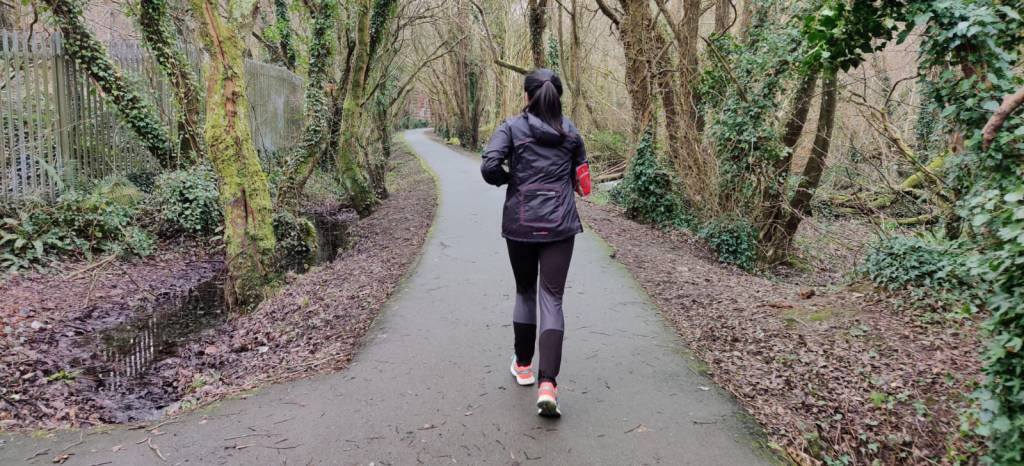
While I had intended to do my long run on a Sunday and instead spend the morning sleeping in and having a bit of a break, my brother had other plans and decided to drag me out on a 12km run, which ended up being a 13km, nearly 14km run but I had to say (even though I still resented him for dragging us out in the cold and into the middle of the woods on a Saturday morning), I had to thank him for actually dragging my sorry ass out of bed and actually making me do my long run.
Its strange, having to run with someone else instead of doing it all alone. I have always been more of a solo kind of girl when it comes to running but my brother may be just about the one person so far I don’t mind running with as long as he doesn’t try to run ahead of me or drive me mad with his crazy rants. Some research has shown that running with someone increased calmness in a person, although it may lead to higher levels of fatigue (although I felt calm, I didn’t really feel tired because I was running really slowly). However, the authors did point out the possibilities of a person’s relationship with the other runner playing a role in whether they may remain calmer during running so not sure how this might pan out when I run with people I’m not too familiar with.
Also, even though its a pain to drag my ass out of bed so early in the morning, the feeling of having completed a run (even though I know I’m in for 3 hours of volleyball training hell tonight) is the best. A study conducted on 51 adolescents found that even with just 30 minutes of running in the morning 5 days a week for three consecutive weeks slept better, had better concentration along with improved mood (Kalak et al., 2012). Quite interestingly, in a study conducted by Tomporowski (2002), he found that if a person were to exercise for too long that leads to dehydration, this might actually affect their cognitive functioning, causing them to perform more poorly on tasks involving information processing and memory functions.
After learning some various theories on how to get on my feet and go through this plan of running a marathon, I came to find SMART goals something I should have done after trying to come up with a mad schedule that I have since come to alter. SMART, a term coined by Doran, Miller and Cunningham (1981) stands for five criteria a person should meet when setting goals; specific, measurable, attainable, relevant and timely. Looking at how I had first set up my schedule, I now feel like an idiot for not having followed the instructions given to me and had put myself at the unnecessary risk of hurting myself.
Johnson, Moore and Thornton (2014) have a nice example of how to use SMART goals to motivate physical education in school children across a semester, which I will break down into what I had not done following this system and what I should do.
| Specific | Measurable | Attainable | Relevant | Timely |
| What I didn’t do:while I did write down that I had to go running at some point, I didn’t exactly come up with what type of run I should do to strengthen myself. What I should do:- incorporate various types of runs into my training plan to enable myself to build up various muscles needed for the long run. | This was just about the only thing I did right. I downloaded Strava and that helped me record how far I ran as well as how long it took for me to run so that was a good thing. | What I didn’t do: I was mad enough to think I could do two 8km runs twice a week as well as increasing my long run mileage by 2km every week. What I should have done:- pace myself out across the week and actually set distances that wouldn’t both make me keel over when thinking about doing them and actually forming a plan that wouldn’t hurt me. | What I didn’t do: I only wanted to do long runs since I am not a fan of fartleks and tempo runs but if I do not do those, it would affect my body’s preparation for the marathon. What should I do:- incorporate runs that would help benefit my body’s endurance | What I didn’t do: I was looking at doing two one hour runs a week, not including the long run and can e very time consuming, especially with me having to incorporate my volleyball training into this. What I should do?- come up with days where I do certain runs that do not use as much time e.g. Tempo runs or Fartlek |
After learning these in class, I’m going to use this knowledge to my advantage and use them to come up with a plan to run this marathon and achieve the goal of actually finishing it. Although I have the Anglesea half-marathon to worry about first thats happening on the 1st of March 2020 so fingers crossed on that.
Until then, peace out and stay tuned for more information on my journey to training for Born to Run.
References:
Doran, G. T. (1981). There’sa SMART way to write management’s goals and objectives. Management review, 70(11), 35-36.
https://runrepeat.com/state-of-running
Johnson, C., Moore, E., & Thornton, M. (2014). A SMART approach to motivating students in secondary physical education. Journal of Physical Education, Recreation & Dance, 85(4), 42-44. Retrieved from https://search-proquest-com.ezproxy.bangor.ac.uk/docview/1519968449?accountid=14874
Kalak, N., Gerber, M., Kirov, R., Mikoteit, T., Yordanova, J., Pühse, U., . . . Brand, S. (2012). Daily Morning Running for 3 Weeks Improved Sleep and Psychological Functioning in Healthy Adolescents Compared With Controls. Journal of Adolescent Health, 51(6), 615-622.
Morris, J. (2007, 11). Reach your dreams. Listen, 61, 20-21. Retrieved from https://search-proquest-com.ezproxy.bangor.ac.uk/docview/230522860?accountid=14874
Plante, T. G., Coscarelli, L., & Ford, M. (2001). Does exercising with another enhance the stress-reducing benefits of exercise?. International Journal of Stress Management, 8(3), 201-213.
Tomporowski, P. D. (2003). Effects of acute bouts of exercise on cognition. Acta psychologica, 112(3), 297-324.
 Born to run blog