At long last, the Anglesey Half-Marathon came around despite three storms ocuring over the past month or so, with the third one making it across the UK right now. It was freezing, my hips hurt a good few miles until the end, but I managed to finish it and got a pretty medal and cool shirt. I was quite happy with my time considering how much pain I was experiencing during the final leg of the race, which hadn’t happened to me before in the past.
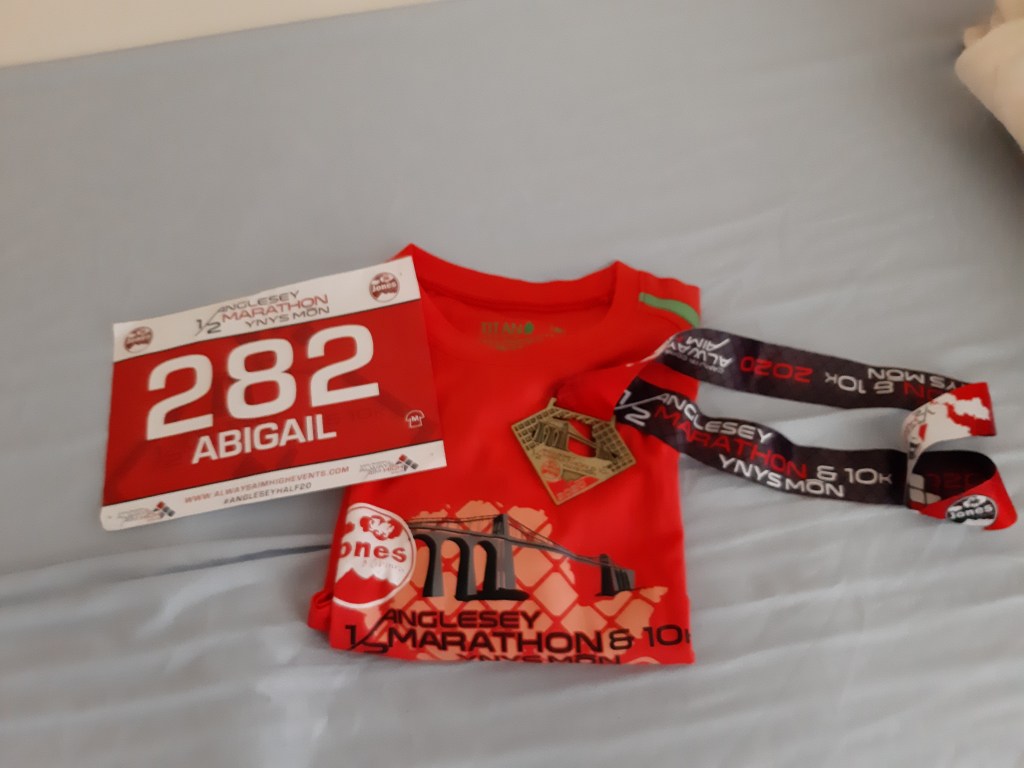
So a few things happened in the race so I will walk through how the race went, more or less in the most detail I can give and make notes on what to do and what not to do in the future.
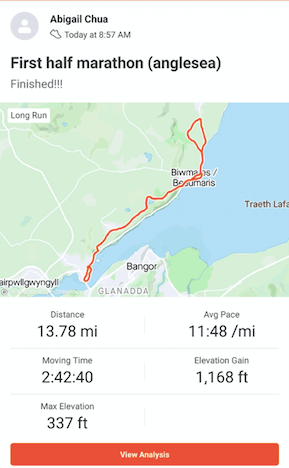
One unexpected thing that happened was a tree falling over the initial race route the night before, causing the organisers to change up the route. What was supposed to be a relatively flat route became a horrible hill right smack in the middle of it along with a few tiny but brutal ones that popped up as we ran back to the finishing line, which was one reason why I found this race pretty hard. Throwing in the fact it is my first race and having to deal with wind and hills, it wasn’t the best combination.
So let’s start off with what went right. I had planned on using music when I was running and since I was running alone (I stupidly forgot to register my brother for the race, thinking I had done so only for me to realise the night before I haven’t), it really helped me when I was running through hard parts of the course. Music has been said to help with dealing with body pain and stress levels by distracting a person’s thoughts from the source of pain and making them focus on something else (North & Hargreaves, 2009). This is because music is a form of dissociative technique, where a person would focus on something other than the task in front of them (Masters & Ogles, 1998). Music that a person choses also has an impact in how they perceive pain, with a study conducted on patients who had undergone surgical treatment showing that those who listened to music of their own choosing often found their feelings towards pain to be less (MacDonald et al., 2003).
Types of music also play a role in how a person may perform in running. Certain types of music such as rap and rock music can result in higher stress levels and increased risk of suicide (North & Hargreaves, 2006). However, it is more important to take into consideration of the lyrics sung in a song that may influence negative behaviour (North & Hargreaves, 2005). On the other hand, inspirational music was found to increase performance in atheletes (Lane, Devis & Devonport, 2011), with atheletes having more positive feelings when running. During the race, I used a mix of inspirational and calming music such as background music from anime and movie scenes which did actually help the pain in my legs reduce when I was feeling tired out as well as giving me a bit of company during the run.
One of the things I thought would help me during the race would be my brother’s presence next to me. Running with another person has been shown to actually help a person run better by increasing the calmness in them (Plante & Ford, 2001) through the social support provided by the other person (Gurung, Sarason & Sarason, 1997). However, this might be affected if the runner is familiar with the other person. However, Plante and Ford (2001) did make a note on familiarity with another person possibly playing a role in a person performing well when exercising with another person, although I am unable to find research regarding this matter at the moment.
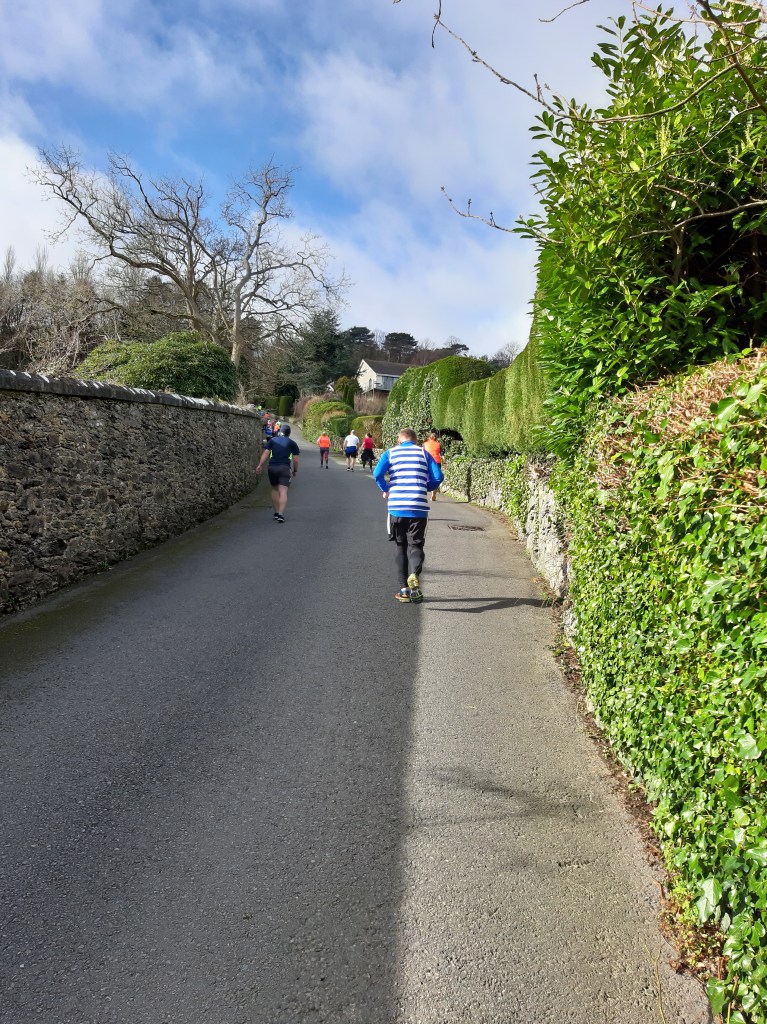
The interesting thing was that even though I hardly talked to anyone, when we reached the stage of having to climb the hill to get to the finishing line, people began to randomly chat to each other. I managed to chat with a lady about 50 years older than me (I have to salute her for doing this gruesome half marathon) about how insane the route was and I did feel comfortable talking to her despite her being a stranger.
Talking to a stranger, as daunting as it seems, can actually bring about some benefits to a person. A study found that just by making small conversation with a barista in Starbucks led to people feeling more positive and had a better experience in Starbucks (Sandstrom & Dunn, 2013). The authors explained this as due to the person having a better sense of belonging by interacting with their environment via social interactions that make them feel as part of the environment. Both me and the lady were runners in this race and by talking to her, I felt that I finally had someone who understood the pain my body and mind was going through at that point, which allowed me to feel like I belonged to this group of people racing to get to the finish line.
However, while talking to a stranger in a running context is often seen as alright, sometimes other situations may not yield the same results. First year college students reported that when they found it difficult talking to other new students in their first few weeks of college, especially when they did not have the same interests (Goldstein, 2018). Without a common topic to link two people together, this leads to feelings of isolation in these individuals, resulting in them finding it harder to make new friends as they isolate themselves from others. Therefore, while talking to strangers can have benefits, it really depends if they have the same goals or maybe same topics of conversation as you do in order for it to really work.
| Plan for the run | What worked | What didn’t work | Outcomes |
| 1. Run with brother | Chatted a bit with other runners during the race | Forgot to register my brother so had to run alone | – Felt a bit better – Felt I wasn’t alone in this |
| 2. Listening to music on my IPod | – felt calmer – took mind off pain in hips and legs – could run better by feeling more focused | – battery on IPod nearly ran out – wind was very strong at some points so could barely hear the music | – could take my mind off the pain – managed to run more calmly |
| 3. Eating right | – didn’t have any stomach aches – could run better | – no comment | – eat a good breakfast before half-marathon or long runs over 13 miles |
So after taking these things into consideration and using them to help myself pull through the race, I managed to finish my first ever marathon and the feeling of finishing it is just amazing. With the help of music, the presence and words of encouragement of my fellow runners, I managed to complete this amazing race. Despite having a badly aching body, especially my knees right now, I would love to do another half-marathon in the future. Although I’m not sure if I would ever do Anglesey Half-Marathon again.
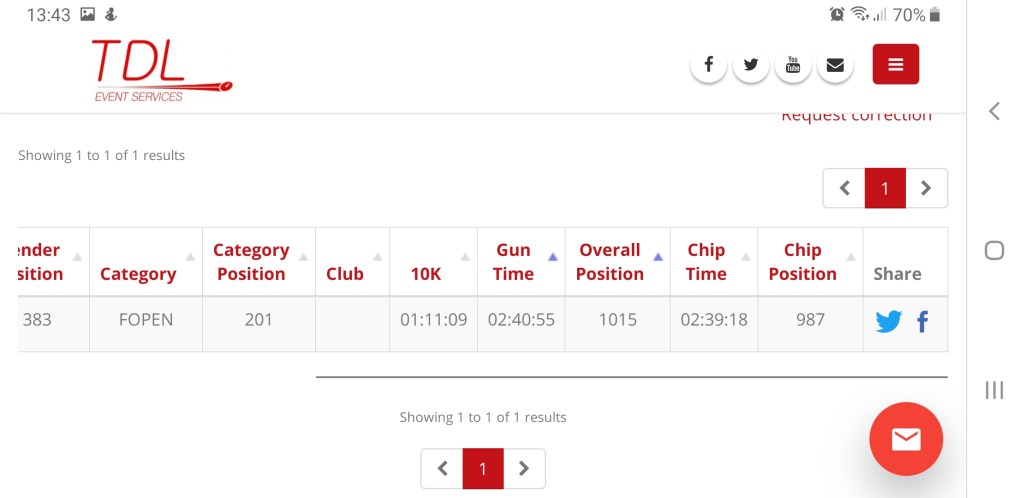
Very proud of my time as well and hopefully, I will be able to improve it in the future.
Now that I have completed the half-marathon and this blog, I’m going to have a nice meal and a good night’s sleep (but not before having a binging session of some anime).
Until the next blog, have a great week and stay tuned for more of my running blogs!
References :
Goldstein, H. (2018). Hello Stranger, Will You be my Best Friend.
Gurung, R., Sarason, B., & Sarason, I. (1997). Close personal relationships and health outcomes: A key to the role of social support. Handbook of personal relationships: Theory, research and interventions (2nd ed) Chichester, UK: Wiley, 547-573.
Lane, A. M., Davis, P. A., & Devonport, T. J. (2011). Effects of music interventions on emotional states and running performance. Journal of sports science & medicine, 10(2), 400.
MacDonald, R. A., Mitchell, L. A., Dillon, T., Serpell, M. G., Davies, J. B., & Ashley, E. A. (2003). An empirical investigation of the anxiolytic and pain reducing effects of music. Psychology of Music, 31(2), 187-203.
Masters, K. S., & Ogles, B. M. (1998). Associative and dissociative cognitive strategies in exercise and running: 20 years later, what do we know?. The Sport Psychologist, 12(3), 253-270.
North, A. C. and Hargreaves, D. J. (2005). Labelling effects on the perceived deleterious consequences of pop music listening. Journal of Adolescence, 28, 433-440.
North, A. C., & Hargreaves, D. J. (2006). Problem music and self-harming. Suicide & Life – Threatening Behavior, 36(5), 582-90.
North, A., & Hargreaves, D. (2009). The power of music. The Psychologist, 22(12), 1012-1014.
Sandstrom, G. M., & Dunn, E. W. (2014). Is efficiency overrated? Minimal social interactions lead to belonging and positive affect. Social Psychological and Personality Science, 5(4), 437-442.
 Born to run blog